March 29, 1849
The Morning of a Stolen Dawn
On the morning of March 29, 1849, the Royal Flag of the Sarkar-e-Khalsa was lowered for the last time at the Lahore Fort, replaced by the Union Jack. After the annexation, the colonizers systematically disarmed the people of Punjab. They took the swords, the shields, and the cannons—but then they snatched something they feared even more than steel: the alphabets of the mother language.
They knew that a man without a sword is a prisoner, but a man without his mother language is a ghost.
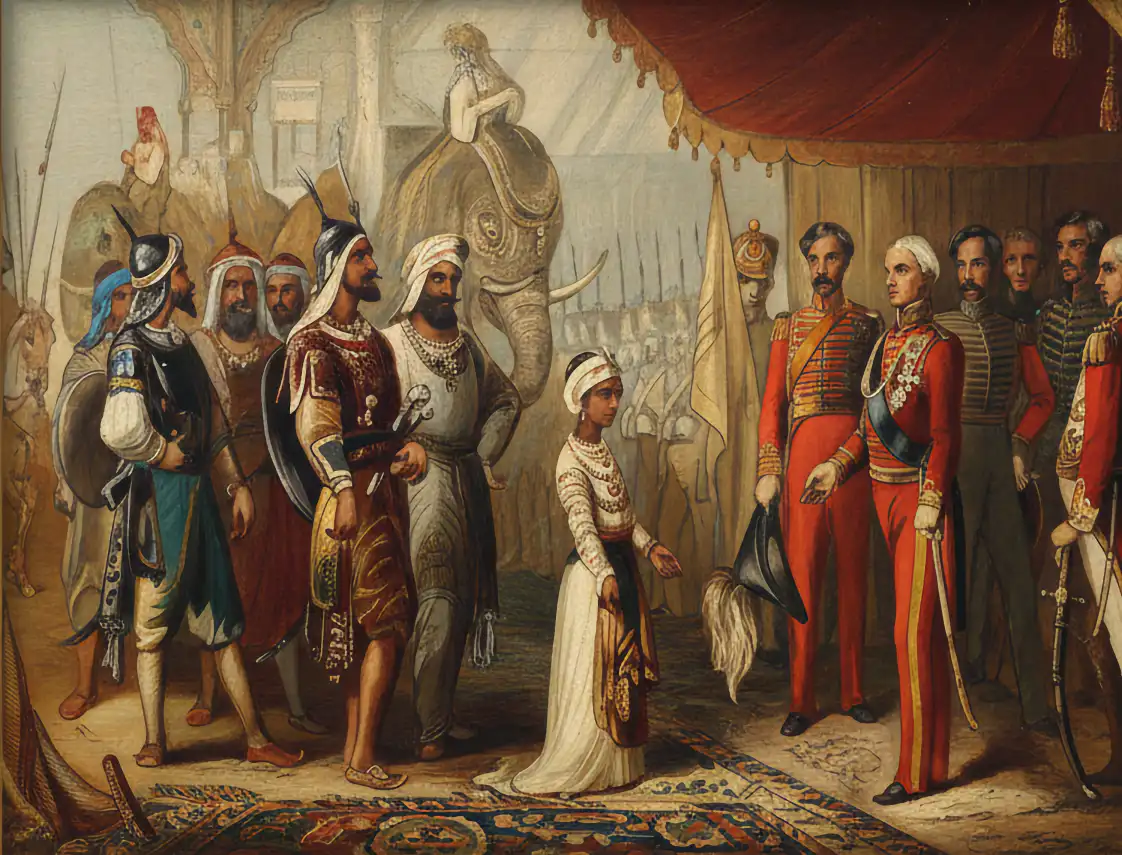
The Annexation of Punjab
The End of Sovereignty
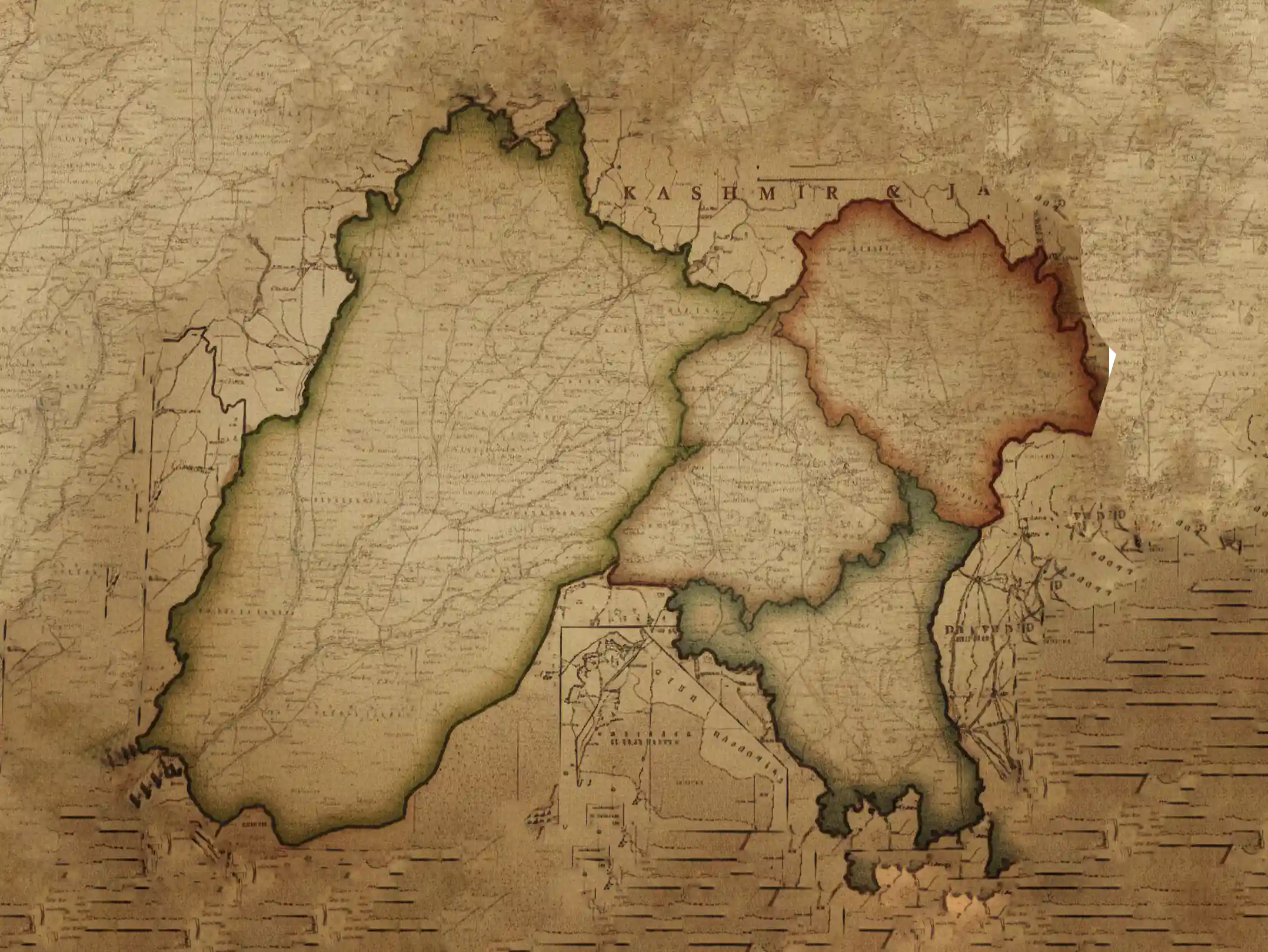
Punjab Partition 1947
Divide of mother land and mother language
1947: The Final Division
Geography of Silence
A century later, the colonial erasure of our mother tongue reached its tragic zenith. As Punjab was divided in 1947, our language was mutilated, and alien linguistic identities were imposed on both sides of the border. This created a profound literacy gap between East and West Punjab. Today, the choice to learn Gurmukhi and Shahmukhi is the only way to bypass this “border of silence” and reconnect with our shared history.
We are restoring the literacy stolen by borders to reconnect the broken lines of Punjab.
Securing the Future
Ways to Learn Gurmukhi and Shahmukhi
“Find your bridge to the motherland. Choose the path that leads you home.”
Gurmukhi → Shahmukhi
Providing East Punjab with keys to the West. Access the vast world of Sufi literature, the records of the Lahore Darbar, and the Zafarnamah. This is also your foundational step toward learning Persian.
Start Learning ShahmukhiShahmukhi → Gurmukhi
Inviting West Punjab to rediscover the indigenous script of the soil. Unlock the verses of the Gurus, treasury of classical literature, and centuries of history preserved within the Gurmukhi script.
Start Learning GurmukhiEnglish → Gurmukhi
Bridging the gap for the global Diaspora. Designed for those raised abroad, this path uses English to build fluency in Punjabi, allowing the younger generation to reconnect with Gurbani and their roots.
Start Learning GurmukhiBegin Your Journey
Select your script to view upcoming batches and registration details to learn Gurmukhi and Shahmukhi.
Gurmukhi Course
Master the indigenous script of the soil. Designed for those looking to read Gurbani, Sikh history, and the literature of Punjab.
Register NowShahmukhi Course
Explore the Perso-Arabic script of Punjab. Perfect for those looking to read Sufi poetry and the historic records of Punjab.
Register NowFrequently Asked Questions
What is the difference between Gurmukhi and Shahmukhi?
Gurmukhi and Shahmukhi are two different writing systems for the same Punjabi language. Gurmukhi is the indigenous script used primarily in East Punjab (India). Shahmukhi is the Perso-Arabic script used primarily in West Punjab (Pakistan). Learning both bridges the literacy gap between the two Punjabs.
Are there online Shahmukhi classes for English speakers?
Our Shahmukhi masterclass is designed for Punjabi speakers proficient in Gurmukhi. While we offer a Gurmukhi course for English speakers, all tracks require a functional understanding of spoken Punjabi, as the medium of instruction is the mother tongue.
How can I learn Gurmukhi from Shahmukhi?
Jeevay Sanjha Punjab provides a specific “Shahmukhi to Gurmukhi” course designed for residents of West Punjab (Pakistan) to rediscover the indigenous script Gurmukhi.
Is the course really free?
Yes. As part of our mission, we believe heritage and literacy should be accessible to all. All our script masterclasses to learn Gurmukhi and Shahmukhi are provided free of charge to help preserve the mother tongue.
Do I need to buy books or materials?
We provide digital versions of our curriculum. However, we highly recommend our independently published Gurmukhi and Shahmukhi Qaidas. These can be found in our Publications section.
A Global Initiative to Learn Gurmukhi and Shahmukhi
The scripts of Punjab are more than just systems of writing; they are the vessels of our collective memory. For over seventy years, the “border of silence” has made the rich literature of West Punjab inaccessible to the East, and the sacred history of East Punjab unreadable to the West. At Jeevay Sanjha Punjab, we believe that literacy is the ultimate tool for cultural reclamation. When you learn Gurmukhi and Shahmukhi, you are effectively dismantling the invisible walls built by the 1947 Partition.
Our structured courses are designed to transition students seamlessly between scripts. By choosing to learn Gurmukhi and Shahmukhi, a new generation is gaining direct access to primary sources—from the spiritual Kalam of Bulleh Shah to the administrative records of the Lahore Darbar. This literacy bridge ensures that our shared heritage is no longer a “stranger” to the soil it was born from.
This project serves the global Punjabi diaspora and local residents alike, fostering a community of learners dedicated to preserving the mother tongue. To learn Gurmukhi and Shahmukhi is to honor the ancestors who carried these scripts through history, ensuring their voices continue to resonate in the hearts of future generations.
To support this journey, we have published a specialized Shahmukhi Qaida with the generous support of Sikhlens, and have independently published our own Gurmukhi Qaida to provide a complete learning toolkit. Explore our Publications to find the resources used in our curriculum.